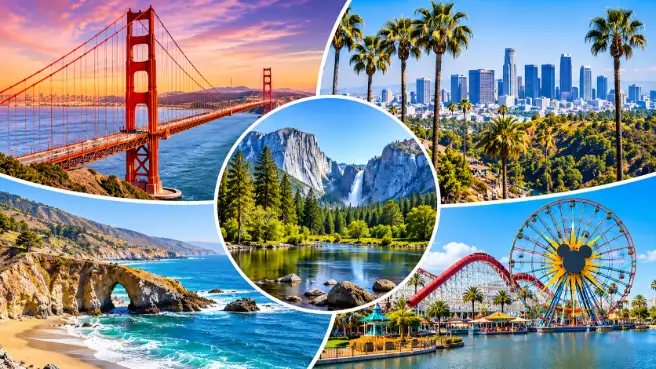
Best Places to Visit in California include Yosemite National Park, Big Sur, Lake Tahoe, Sequoia and Kings Canyon, Joshua Tree, San Francisco, Los Angeles, San Diego and Napa Valley. Together, these destinations cover granite mountains, giant sequoias, desert skies, beaches, film culture, museums, coastal drives and world-famous vineyards. However, the best choice depends on whether you want nature, city energy, a road trip or a slower food-and-wine escape.
California is unusually easy to customize. For example, a first-time visitor can combine a major city with one national park, while a longer trip can follow the Pacific Coast Highway from the San Francisco area toward Southern California. The practical difference is distance. Therefore, choosing fewer regions often creates a better trip than trying to see everything at once.
Quick planning summary:
- Choose Yosemite or Sequoia for mountain scenery and hiking.
- Choose Big Sur for a dramatic coastal drive.
- Choose San Francisco, Los Angeles or San Diego for culture, beaches and major attractions.
- Reserve popular park access, camping and Alcatraz tickets well in advance.
Which natural wonders deserve priority?
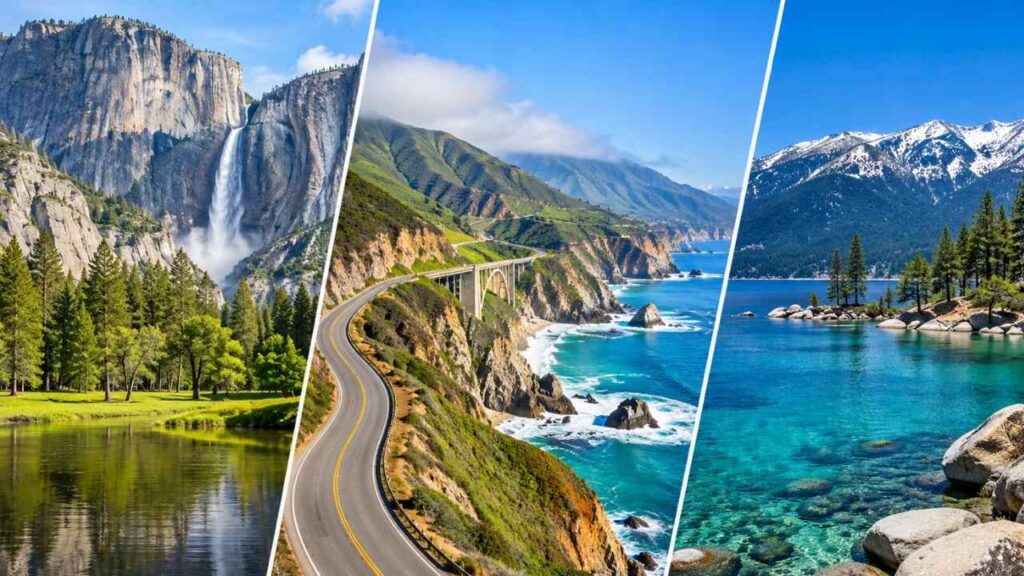
The strongest natural choices are Yosemite National Park, Big Sur, Lake Tahoe, Sequoia and Kings Canyon National Parks and Joshua Tree National Park. Each offers a different landscape. Therefore, the right destination depends on your available time and physical interests. Yosemite suits waterfall and mountain lovers, Big Sur works best for a scenic drive, while Joshua Tree is especially appealing for camping and stargazing.
Yosemite National Park
Yosemite National Park sits in the Sierra Nevada and is known for towering granite formations, dramatic waterfalls and ancient trees. In particular, Half Dome and El Capitan are among its most recognizable landmarks. Yosemite Falls is also one of North America’s tallest waterfalls, so spring is particularly attractive when snowmelt increases the water flow.
Visitors can watch sunset from Glacier Point, cycle through Yosemite Valley and hike around Tuolumne Meadows. However, a useful planning distinction is elevation. Valley walks and viewpoints may be accessible earlier in the season, while high-country routes can remain affected by snow. Therefore, check current conditions through the National Park Service Yosemite page before setting out.
Big Sur and Pacific Coast Highway
Big Sur is the most visually dramatic section of California’s Highway 1. Mountains rise directly from the Pacific Ocean, producing steep cliffs, ocean overlooks and a memorable road-trip setting. Meanwhile, Bixby Creek Bridge is one of the route’s best-known landmarks, while McWay Falls drops toward the beach at Julia Pfeiffer Burns State Park.
The drive is beautiful, but it should not be treated as a rushed transfer between cities. Pullouts can be limited, road conditions may change and mobile service can be inconsistent. Therefore, download maps, keep fuel above a comfortable level and confirm road access before departure. For many travelers, Big Sur is better experienced over one or two relaxed days than as a single nonstop drive.
Lake Tahoe
Lake Tahoe lies on the California–Nevada border and is North America’s largest alpine lake. Clear blue water, snowy mountains and outdoor recreation make it a year-round destination. In winter, visitors can ski or snowboard at nearby resorts, while summer travelers can kayak, boat, swim and explore lakeside trails.
Lake Tahoe also illustrates why seasonal planning matters. Snow and mountain weather can affect driving, while summer weekends may bring heavier traffic around popular beaches and trailheads. As a result, someone choosing a quiet lakeside holiday may prefer a weekday visit, whereas a skier should focus on resort conditions and road forecasts before leaving.
Sequoia, Kings Canyon and Joshua Tree
Sequoia and Kings Canyon National Parks protect some of the world’s most impressive giant sequoias. The General Sherman Tree is the largest tree on Earth by volume, and standing near its immense trunk gives visitors a clear sense of the forest’s scale. Consequently, these parks are ideal for travelers who want ancient woodland, mountain roads and quieter natural surroundings.
Joshua Tree National Park offers a completely different experience. Strange Joshua trees, huge boulder formations and dry desert light create an almost surreal landscape. After dark, the clear sky can reveal the Milky Way without a telescope. However, bring sufficient water, protect yourself from sun exposure and plan fuel stops carefully because desert facilities are more limited than those in major cities.
Which California cities fit your travel style?
California’s major cities are not interchangeable. San Francisco is compact, historic and shaped by hills and the bay. By contrast, Los Angeles is spread out and centered on entertainment, beaches and neighborhood discovery. San Diego combines a relaxed coastal atmosphere with museums, gardens and family-friendly attractions. Therefore, selecting one city as a base can reduce driving time and make the trip feel more coherent.
San Francisco
San Francisco is recognized for steep streets, historic cable cars, Victorian architecture and changing coastal weather. The Golden Gate Bridge remains the city’s defining landmark, especially when fog moves across the bay. Additionally, Alcatraz Island adds a strong historical dimension, while Fisherman’s Wharf and Pier 39 are convenient places to sample seafood and watch the resident sea lions.
Wear comfortable shoes because many neighborhoods involve steep climbs. Furthermore, a light jacket is useful even in summer, when cool wind and fog can make the waterfront feel much colder than inland areas. Travelers should also reserve Alcatraz tickets early, particularly when their schedule allows only one possible day in the city.
Los Angeles
Los Angeles is the natural choice for travelers drawn to film culture, celebrity history and beach neighborhoods. Hollywood’s Walk of Fame displays star plaques along the sidewalks, while the Hollywood Sign provides one of the city’s most recognizable photo backdrops. In addition, Universal Studios Hollywood adds studio attractions, themed rides and a full-day entertainment option.
Santa Monica and Venice Beach show a different side of Los Angeles. The Santa Monica Pier offers a classic coastal setting, while Venice is known for its colorful atmosphere and boardwalk culture. Because distances between neighborhoods can be substantial, group nearby attractions together instead of planning Hollywood, Santa Monica and other distant areas on the same tightly timed day.
San Diego
San Diego, near the Mexican border, is known for mild weather, beaches and an easygoing coastal character. The San Diego Zoo is one of the city’s major attractions, and Balboa Park brings together museums, gardens, theaters and Spanish-inspired architecture. Meanwhile, La Jolla adds sea caves, scenic shoreline and opportunities to observe seals and sea lions from a respectful distance.
San Diego works well for families and travelers who prefer a slower city break. For example, a practical day might pair Balboa Park with the zoo or combine La Jolla with a nearby beach. However, keep wildlife viewing nonintrusive, stay behind marked barriers and avoid feeding or approaching marine animals.

Is Napa Valley worth adding?
Napa Valley and neighboring Sonoma County are strong choices for visitors interested in vineyards, food and relaxed countryside. The region is known for wine production, tasting rooms, historic wineries, vineyard landscapes and resort experiences. It can be visited as a day trip from the San Francisco area, although an overnight stay allows more time for meals, tastings and rural scenery.
Popular activities include guided wine tastings, vineyard visits, spa treatments and hot-air-balloon rides over the valley. Even so, visitors who do not drink can still enjoy restaurants, gardens, scenic drives and non-alcoholic options. If wine tasting is part of the plan, arrange a designated driver, a chauffeured service or a guided tour rather than driving after consuming alcohol.
Napa Valley is also a useful example of choosing depth over quantity. For instance, three carefully selected wineries can create a more comfortable day than attempting to visit six or seven. Therefore, reserve tasting appointments, confirm the cancellation policy and check travel times between properties because the valley’s roads can become busy during popular weekends.
Who should choose Napa over a national park?
Napa Valley suits travelers who value food, architecture, hospitality and a slower pace. On the other hand, a national park is usually a better fit for visitors seeking strenuous hiking, waterfalls, wildlife or dramatic wilderness. Couples, food-focused travelers and small groups may prefer Napa, while first-time outdoor visitors often gain more from Yosemite, Big Sur or Sequoia.
| Destination | Best for | Planning consideration |
|---|---|---|
| Yosemite | Waterfalls, granite cliffs and hiking | Check seasonal access and reserve popular facilities early |
| Big Sur | Coastal scenery and road trips | Confirm Highway 1 conditions before driving |
| Lake Tahoe | Skiing, boating and alpine scenery | Match the trip to snow or summer conditions |
| Napa Valley | Wine, food and countryside | Book tastings and arrange safe transportation |
| Joshua Tree | Desert landscapes and stargazing | Carry water and plan fuel carefully |
When is the best time to visit California?
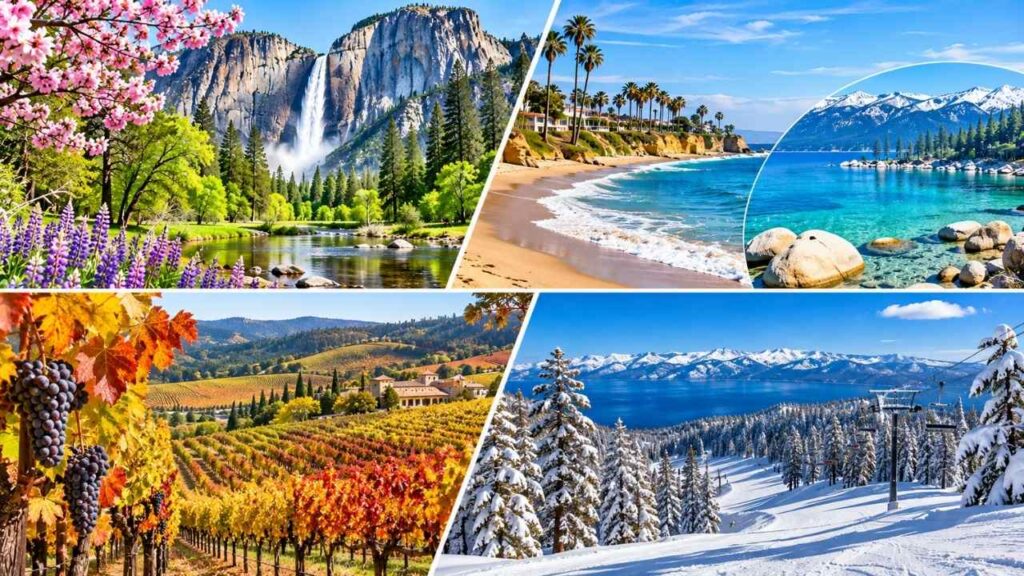
The best time depends on the experience you want. Spring, from March through May, brings pleasant conditions, stronger waterfall flow in mountain regions and wildflowers in parts of the desert. Meanwhile, summer, from June through August, is attractive for beaches and lake activities but usually brings heavier crowds and higher travel demand.
Fall, from September through November, offers comfortable weather and harvest activity in Napa Valley. Crowds may ease after the busiest summer period, although conditions vary by destination. By contrast, winter, from December through February, is the main season for skiing around Lake Tahoe, while Northern California may receive more rain.
| Season | Best match | What to watch |
|---|---|---|
| Spring | Hiking, waterfalls and desert wildflowers | High-elevation trails may still have snow |
| Summer | Beaches, boating and long daylight hours | Crowds, traffic and increased demand |
| Fall | Napa Valley, coastal drives and mild city visits | Harvest-period reservations can fill quickly |
| Winter | Lake Tahoe skiing and quieter city breaks | Rain, snow and mountain-road conditions |
How should a first-time visitor choose?
Start with the activity that matters most, then select the region that supports it. Choose Yosemite or Sequoia for mountain scenery, Big Sur for a coastal drive, Lake Tahoe for alpine recreation, Joshua Tree for desert nights, Napa Valley for wine and food, or San Diego for beaches and a relaxed city stay. In this way, the simple filter prevents an overpacked itinerary.
- Choose one primary region.
- Add no more than two major bases for a short trip.
- Group nearby attractions on the same day.
- Check park, road and attraction conditions before departure.
- Leave time for traffic, parking and unplanned viewpoints.
What should you arrange before departure?
A rental car is often the most practical option outside dense urban areas because California is geographically large and public transportation can be limited near national parks, coastal viewpoints and desert attractions. San Francisco is an exception, especially for visitors staying centrally. In Los Angeles, a car can be useful, but traffic may make neighborhood-based planning more efficient.
Pack layers rather than relying on one weather forecast. For example, San Francisco can feel chilly and windy during summer, while desert parks can become hot during the day and much cooler after sunset. Consequently, comfortable walking shoes, sun protection, reusable water bottles and a light jacket are useful across several regions.
What needs advance booking?
Yosemite access rules, camping availability and popular facilities can change, so verify current requirements before traveling. Alcatraz tickets should also be purchased early when the itinerary is fixed. Likewise, Napa tasting appointments, hot-air-balloon rides and highly requested accommodations may require advance reservations as well.
A simple booking checklist can prevent the most common disruptions:
- Confirm national park entry, reservation or timed-access requirements.
- Reserve campsites and lodging before finalizing remote day trips.
- Book Alcatraz and other timed attractions before arrival.
- Check Highway 1, mountain passes and weather conditions.
- Save offline maps for areas with weak cellular service.
How can visitors stay safe around wildlife?
Wildlife belongs at a distance. In national parks, never feed animals and follow food-storage rules designed to prevent bears from associating people with food. Keep snacks sealed, dispose of waste correctly and follow posted instructions at campgrounds. Similarly, in coastal areas, remain behind barriers and avoid approaching seals or sea lions.
Desert safety requires equal attention. Carry more water than the minimum you expect to use, avoid strenuous activity during the hottest hours and tell someone about remote plans. As a result, a short walk can become difficult when heat, limited shade and weak phone service occur together.
What mistakes should new visitors avoid?
The most common mistake is treating California as a compact destination. A route that looks short on a map can take much longer because of mountain roads, coastal curves, city traffic and limited parking. Therefore, building an itinerary around too many distant stops often reduces the time available for the places that attracted you in the first place.
- Overloading the schedule: Keep one major attraction as the day’s anchor.
- Ignoring microclimates: Pack layers for San Francisco, mountain areas and deserts.
- Skipping reservations: Confirm timed entry, camping and attraction tickets early.
- Assuming every road is open: Check official road and park updates.
- Underestimating fuel needs: Fill up before entering remote mountain or desert areas.
- Approaching wildlife: Use viewing areas and follow posted distance rules.
Another avoidable error is choosing a destination without checking personal fitness and comfort. A waterfall viewpoint, a long trail and a coastal overlook may all appear in the same itinerary, yet they demand different levels of walking, elevation gain and preparation. Therefore, select activities that match the group’s abilities rather than copying a generic list.
Which California destination is right for you?
The best places to visit in California depend on the kind of memory you want to create. Nature-focused travelers can prioritize Yosemite, Sequoia, Big Sur or Joshua Tree. City explorers may prefer San Francisco, Los Angeles or San Diego. Meanwhile, Napa Valley is a natural fit for food and wine, while Lake Tahoe combines scenery with seasonal outdoor activities.
For a first trip, a focused route is usually more rewarding than a checklist that crosses the entire state. Pick one city, one signature landscape and one flexible day. Before leaving, verify official park rules, road conditions, attraction reservations and weather for each region on your route.
Information check and update note: Park access, road conditions, reservations, operating hours and local travel rules can change. Therefore, verify those details with official sources before departure. Last verified: November 2026.
Frequently asked questions
What are the best places to visit in California for first-time travelers?
Yosemite, San Francisco, Los Angeles and Big Sur provide a balanced first trip with mountains, city culture and coastal scenery. If your schedule allows, add San Diego or Napa Valley.
Is California better for a road trip or a city vacation?
Both work well. A road trip suits national parks and Big Sur, while San Francisco, Los Angeles and San Diego offer richer experiences when explored by neighborhood.
How many days are needed to see California?
There is no single ideal number. For a short trip, focus on one region. A longer visit can combine a city with one or two major natural destinations.
Can I visit Yosemite and Big Sur on the same day?
That pairing is usually impractical because mountain roads, coastal routes and travel distances require substantial time. Instead, separate them into different travel days.
What should I pack for a California trip?
Bring comfortable shoes, sun protection, a reusable water bottle and light layers. Additionally, add warmer clothing for mountain areas and a jacket for cool coastal evenings.
Do I need a car in California?
A car is helpful for national parks, desert areas and coastal routes. However, it is less necessary in central San Francisco, where public transportation and walking can cover many attractions.
Is Napa Valley suitable for travelers who do not drink wine?
Yes. Napa Valley also offers restaurants, gardens, scenic drives, spa experiences and countryside views. Before booking, confirm non-alcoholic options with individual venues.