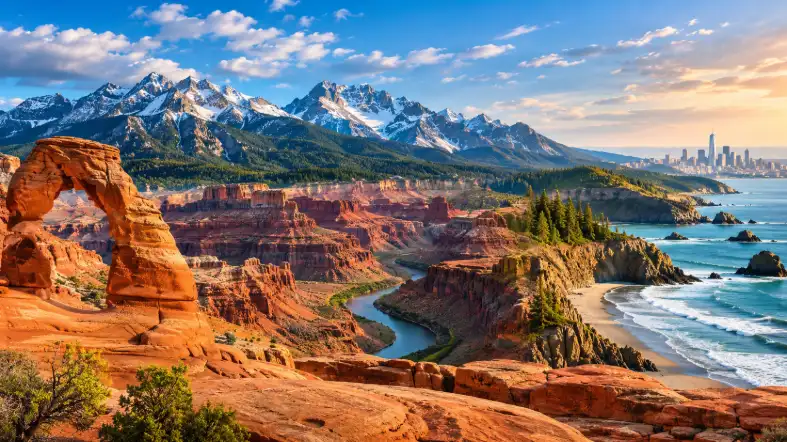
When a first trip across the United States feels too large to plan, start by matching the destination to your travel style. The Best Places to Visit in the USA range from New York City and San Francisco to the Grand Canyon, Utah’s red-rock parks, Colorado mountain towns, Pacific beaches, and Hawaiian islands. A practical choice depends on whether you want culture, hiking, scenery, food, history, or a road trip.
- Choose major cities for museums, music, dining, and landmarks.
- Pick national parks for dramatic scenery and outdoor activities.
- Use coastal routes and mountain towns for a slower road-trip experience.
- Check official park, weather, road, and attraction updates before departure.
There is no single winner for every traveler. A museum lover may prefer Washington, D.C., while a beginner seeking varied scenery may enjoy the California coast. Someone planning a demanding outdoor trip may find southern Utah or the Grand Canyon more rewarding.
How Do You Choose the Best Places to Visit in the USA?
The best places to visit in the USA depend on three practical questions: how much time you have, how far you want to travel, and what you want to do each day. Cities work well for short breaks because museums, restaurants, neighborhoods, and landmarks sit within one metropolitan area. National parks often require more driving, advance planning, and physical preparation.
For a simple decision, match the trip to the experience you want most:
| Travel preference | Strong destination choices | What to expect |
|---|---|---|
| City culture and museums | New York City, Washington, D.C., San Francisco | Landmarks, galleries, theater, public transportation, and restaurants |
| Desert landscapes | Grand Canyon, Zion, Arches, Canyonlands, Sedona | Cliffs, canyons, rock formations, trails, and intense seasonal heat |
| Mountain scenery | Rocky Mountain, Grand Teton, Ouray, Crested Butte | High-elevation trails, wildlife, wildflowers, and changing weather |
| Coast and ocean | Yachats, Big Sur, Maui, Honolulu, Lake Tahoe | Beaches, scenic drives, water activities, and coastal viewpoints |
| Food, wine, and small towns | Willamette Valley, Sonoma County, Charleston, Savannah | Regional cuisine, vineyards, historic streets, and relaxed local areas |
A useful planning rule is to avoid combining distant regions into one rushed itinerary. New York City and Hawaii require a very different plan from a Colorado road trip. By contrast, San Francisco, Sonoma County, and the California coast can form a logical regional journey.
Which U.S. Cities Offer the Most Culture?
New York City is a strong choice for travelers who want a dense mix of skyline views, Broadway theater, world-class museums, restaurants, and distinct neighborhoods. Washington, D.C. suits visitors who prefer monuments, American history, and the Smithsonian museums around the National Mall. Both cities can fill several days without requiring a rental car.
San Francisco combines the Golden Gate Bridge, Alcatraz, cable cars, steep streets, waterfront views, and a varied dining scene. Its relatively compact layout and public transportation make it easier to explore than many spread-out U.S. cities, although visitors should check current local conditions and transportation information before traveling.
Charleston, South Carolina, and Savannah, Georgia, offer a different rhythm. Cobblestone streets, historic architecture, moss-draped squares, and Southern regional food make both cities appealing for travelers who prefer walking, photography, and heritage-focused sightseeing. Their charm comes from the relationship between buildings, streets, gardens, and public spaces rather than from one isolated attraction.
Las Vegas and Nashville are better suited to entertainment-focused trips. Las Vegas centers on resorts, shows, dining, and nightlife. Nashville is closely associated with live music and food. A first-time visitor should decide whether the main goal is attending performances, exploring neighborhoods, trying restaurants, or using the city as a base for nearby activities.
Portland, Oregon, adds a smaller-scale urban option. The city is known for accessible neighborhoods, independent shops, restaurants, brewpubs, and public transportation. The NW 23rd area, also called Nob Hill, is one recognizable place to explore. Because conditions in any downtown area can change, confirm current local guidance before visiting.
Which National Parks Deserve Priority?
Grand Canyon National Park is one of the clearest choices for travelers seeking a landmark landscape. Viewpoints provide dramatic scale, while trails offer a closer experience of the canyon and the Colorado River. Hiking below the rim requires more preparation than a viewpoint visit because temperature, elevation, distance, water, and return effort can vary sharply.
Southern Utah provides an unusually rich cluster of national parks. Arches features natural arches, spires, road-accessible viewpoints, and trails of different lengths. Canyonlands includes areas such as Island in the Sky, the Needles, the Maze, and Horseshoe Canyon. Capitol Reef adds layered rock formations and trails, while Zion is known for towering red walls, the Virgin River, and the Narrows.
Bryce Canyon belongs on a wider Utah itinerary, although travelers should confirm trail and access details before making plans. The region becomes very hot in summer, especially on exposed trails. Spring and autumn can offer more comfortable conditions, but weather and park access still require checking with the National Park Service.
Rocky Mountain National Park and Grand Teton National Park suit visitors who want alpine scenery. Rocky Mountain is popular for hiking, sunrise views, mountain roads, and autumn elk activity. Grand Teton creates a striking contrast between broad plains and jagged peaks. Trails, lakes, scenic drives, and wildlife viewing all play a role, but conditions can change quickly at higher elevations.
Yellowstone adds geysers, hot springs, wildlife, and geothermal landscapes to a mountain trip. Acadia National Park offers rugged coastal scenery, while Glacier National Park is known for alpine lakes and mountain drives. These parks are not interchangeable: Acadia fits a coast-and-forest itinerary, whereas Glacier and Yellowstone require greater attention to distance, weather, and road access.
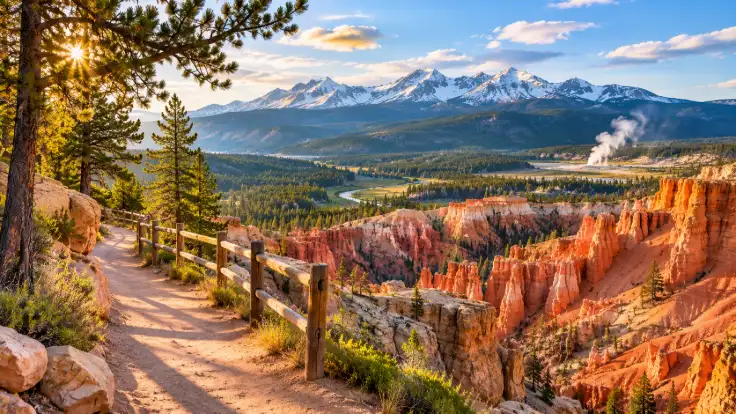
What Should New Hikers Know?
New hikers should begin with short, well-marked trails and avoid treating a scenic viewpoint as proof that every nearby route is easy. Canyon trails, high-elevation paths, river routes, and technical slot canyons carry different risks. In southern Utah, technical canyoneering should be reserved for people with appropriate skills or experienced guidance.
- Read the official trail description before leaving.
- Check weather, heat, closures, water needs, and return distance.
- Tell someone your route when hiking beyond busy areas.
- Carry suitable footwear, food, water, and navigation tools.
- Turn around early when conditions become unsafe.
Where Can You Find the Best Western Landscapes?
Colorado offers several of the best places to visit in the USA for travelers who want mountain towns, wildflowers, scenic drives, and outdoor recreation. Ouray has an old mining-town character, hiking trails, four-wheel-drive routes, winter ice climbing, and a hot springs pool. Summer favors hiking and off-road exploration, while winter brings snowshoeing and ice-related activities.
American Basin, near Lake City, is a high-elevation destination known for summer wildflowers and mountain scenery. The road may require four-wheel drive or strong vehicle clearance, depending on conditions. Visitors can hike toward Sloan’s Lake, while experienced mountaineers may consider Handies Peak. At 14,058 feet, the peak should not be treated as a casual walk.
Crested Butte changes character with the seasons. Summer brings mountain wildflowers, hiking, and biking. Autumn highlights bright aspen colors, especially along Kebler Pass Road. The town has an independent, relaxed feel, while Mt. Crested Butte focuses more on lodging and winter ski access. Road conditions and seasonal openings should be verified before departure.
Golden, Colorado, works well for travelers who want a small-town base near Denver. Clear Creek runs through the community, and nearby options include river activities, trails, rock climbing, mountain biking, breweries, and Jefferson County Open Space parks such as White Ranch, Matthews Winters, Apex, Mount Falcon, North Table, and South Table.
Santa Fe and Taos, New Mexico, appeal to visitors drawn to art, adobe architecture, Southwestern food, galleries, and a bohemian atmosphere. Their appeal is cultural as much as scenic. A short visit can cover major highlights, but travelers interested in museums, historic churches, and regional art should allow time for slower exploration.
Which Coast and Road Trips Are Worth Taking?
Big Sur and the California coast combine dramatic cliffs, redwood groves, seaside towns, beaches, and mountain views. A coastal drive can feel like several landscapes in one route, but travelers should not assume every section is open or easy to drive. Check road conditions, closures, fuel availability, and overnight options before setting out.
Yachats, Oregon, suits travelers who want a quiet coastal base rather than a busy resort town. Cape Perpetua Scenic Area, Siuslaw National Forest, tide pools, sandy beaches, sunsets, and Heceta Head Lighthouse are nearby points of interest. The area works particularly well for photography, short walks, scenic stops, and a slower Pacific Northwest itinerary.
The Willamette Valley begins a short trip south of Portland and stretches toward Eugene. The valley is known for vineyards, agricultural scenery, farm-to-table dining, and Pinot Noir. Newberg and Dundee provide useful bases for exploring nearby wineries. Small producers may require appointments, so confirm opening hours and reservation policies before visiting.
Sonoma County and Healdsburg offer vineyards, countryside, independent shops, restaurants, and a town-square setting. The region produces Zinfandel, Pinot Noir, Chardonnay, and Sauvignon Blanc. It can suit travelers who want wine-country scenery without building the entire trip around formal luxury experiences. A designated driver or another safe transportation plan is essential for tasting visits.
Lake Tahoe spans California and Nevada and changes with the seasons. Winter supports snow sports, while warmer months are suited to boating, hiking, swimming, and beach days. Maui and Honolulu on Oahu provide tropical beaches, volcanic scenery, and ocean activities. Island trips require extra attention to flights, rental cars, weather, and reservations.
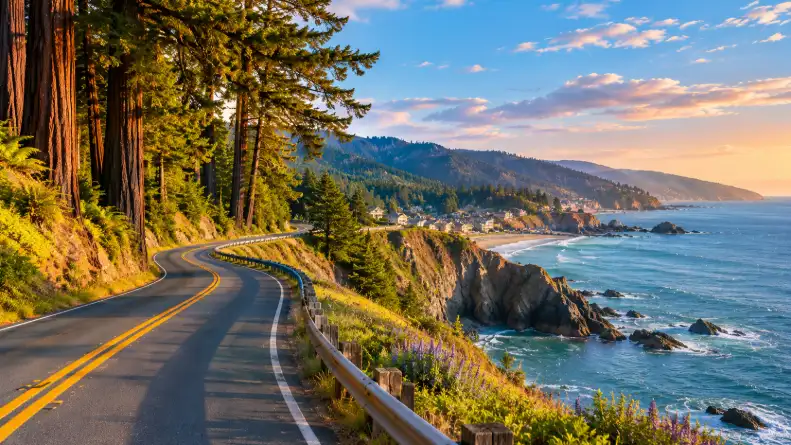
How Can You Build a Better U.S. Itinerary?
The most efficient itinerary groups destinations by geography instead of collecting famous names from every region. For example, San Francisco, Sonoma County, and Big Sur can form a California journey. Portland, the Willamette Valley, and Yachats create a practical Oregon route. Colorado can connect Golden, Rocky Mountain National Park, Ouray, American Basin, and Crested Butte, though mountain roads and driving times need careful review.
Use the following planning sequence:
- Choose one region rather than the entire country.
- Select one main base for every few nights.
- Mark the activities that need reservations or permits.
- Leave space for weather, traffic, rest, and unexpected closures.
- Check official transportation, park, and attraction pages shortly before departure.
A road trip is not automatically better than a city trip. Driving helps in rural areas, wine country, and national parks, but parking and long distances can reduce time for sightseeing. Public transportation may work better in New York City, Washington, D.C., San Francisco, and Portland.
Travelers should also consider physical ability and experience. The Grand Canyon, high Colorado trails, Zion’s Narrows, and technical slot canyons are not equal in difficulty. A destination becomes more enjoyable when the route matches the traveler’s preparation rather than an idealized photograph.
Places Still Worth Adding to the List
Several destinations deserve consideration when time, weather, and access fit the plan. Yosemite National Park, Joshua Tree National Park, the redwood country of Northern California, Crater Lake National Park, the southern Oregon coast, the San Juan Islands, Olympic National Park, Mount Rainier National Park, Glacier National Park, Bryce Canyon National Park, Mesa Verde National Park, Great Sand Dunes National Park, Yellowstone National Park, Badlands National Park, and Minnesota’s lakes all offer distinct experiences.
A long Pacific Coast Highway journey from Washington to California is another attractive idea for travelers who prefer a gradual route. That trip would combine coastal towns, forests, beaches, viewpoints, and changing weather. It should be planned as a flexible journey rather than a fixed race between endpoints.
The central lesson is simple: do not see western landscapes only from a parking area if your health, time, and preparation allow a trail, bicycle ride, kayak trip, or scenic drive. Outdoor access reveals details that a quick viewpoint stop can miss. At the same time, responsible planning matters more than checking off the largest number of attractions.
Frequently Asked Questions
What are the best places to visit in the USA for first-time travelers?
New York City, Washington, D.C., San Francisco, the Grand Canyon, and the California coast offer a broad mix of culture, history, scenery, and recognizable landmarks.
What is the best U.S. destination for national parks?
Southern Utah is a strong choice because Arches, Canyonlands, Capitol Reef, Bryce Canyon, and Zion create a concentrated landscape-focused itinerary.
When should I visit the Grand Canyon?
Spring and autumn are often more comfortable for hiking than summer. Always check current temperatures, trail notices, water guidance, and park conditions before starting.
Is California or Oregon better for a scenic road trip?
California suits travelers seeking cliffs, beaches, redwoods, and major cities. Oregon offers vineyards, quieter coastal communities, forests, and a slower Pacific Northwest atmosphere.
Are Colorado mountain destinations suitable for beginners?
Some are. Golden and scenic areas around Crested Butte offer accessible options, while high-elevation hikes, Handies Peak, and remote roads require stronger preparation.
How should I verify current travel information?
Check official National Park Service pages, state transportation agencies, local visitor bureaus, weather services, and attraction websites shortly before departure.
Finding Your Right American Journey
The best places to visit in the USA are not limited to the most famous landmarks. New York City may deliver culture, Zion may provide red-rock scenery, and Yachats may offer the quiet coast a busy itinerary needs. Choose one region, build around your actual interests, and leave enough time for conditions to change.
Before booking, verify park access, road conditions, seasonal services, reservations, and local guidance through official sources. That final check can turn a beautiful destination list into a realistic and safer travel plan.
Information check: park access, road conditions, attraction hours, reservation rules, and transportation details can change.